MND changed the destroyed Lužice site, turning it into a modern, sustainable technology park
Five years ago, a devastating tornado hit South Moravia. MND was one of the companies that suffered the most. Its Lužice site was damaged, costing more than EUR 10.3 million. In the years that followed, MND not only fixed up the damaged site, but also changed it into a modern, sustainable technology park with new facilities, a strong focus on water management, and a better working environment for employees.

Soon after the tornado, the Karel Komárek Family Foundation gave EUR 6.2 million to help the area. EUR 2.1 million went directly to affected families, while another EUR 4.1 million was designated for the restoration of public spaces in Hodonín, an area where the foundation has been active for two decades.
Thanks to the city of Hodonín, the KKFF Foundation, and other partners working together, 24 projects to restore the area are now being done. These restoration projects will cost a total of EUR 32.6 million. These projects now serve both residents and visitors. Some of these projects are the Hodonínská Dúbrava Nature House and its garden, U Červených Domů Park, a sports complex, a children's town, and the Bažantnice suburban forest park. More than 2,500 people and 45 partner organizations worked together to change the Bažantnice area and the surrounding public spaces in Hodonín.
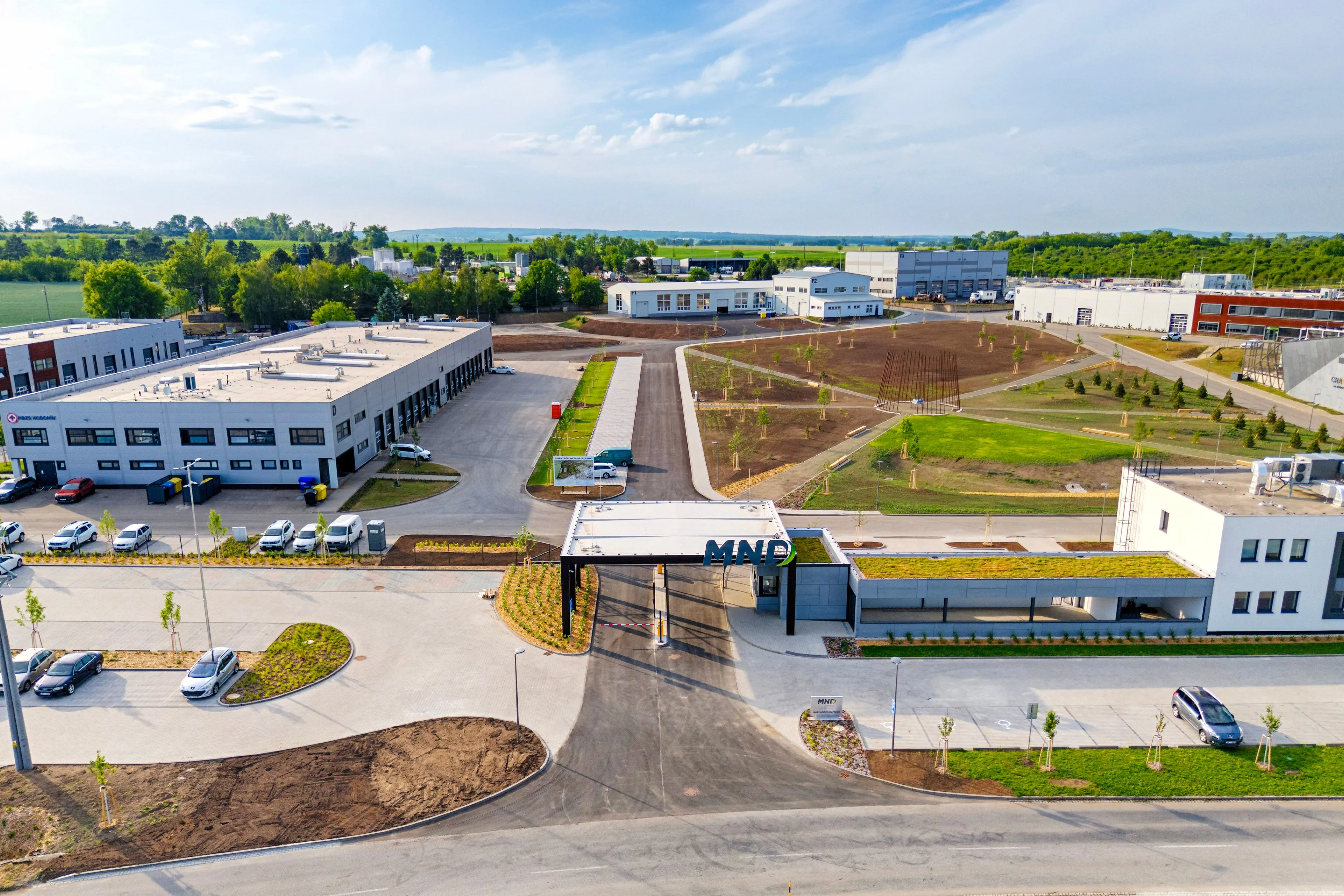
As with the restoration of public spaces in Hodonín, the goal in Lužice was not just to repair the site. MND used the restoration of the MND Drilling & Services site as an opportunity for a complete transformation, modernization, and technological development. The result is a modern, eco-friendly space that meets today's needs, uses the latest energy technologies, and offers a better work environment for employees.
“When the tornado struck South Moravia in 2021, there was no crisis manual for a situation like that. We had to act quickly, help people, get equipment to the site, and coordinate the initial response effectively. At the same time, it was clear from the beginning that real recovery would not be a matter of days or months. In both Hodonín and Lužice, we wanted to do more than just fix the damage. We wanted our help to have a lasting impact, so we needed to leave behind something that would benefit the region for ten or twenty years. In Hodonín, this meant fixing up public spaces and starting projects that made life better for people all over the area. In Lužice, it meant making changes to the MND site. They didn't just repair it, they also made it more modern so that it would better serve employees and support the company's continued development."
For Karel Komárek, the restoration of the Hodonín region is very personal. He was born in Hodonín, and he started his business in South Moravia. MND, which started in Hodonín and Lužice, is still an important part of the KKCG Group. We're helping the region after the tornado in more ways than one. We're providing immediate help to affected families. We're also working to restore public spaces and modernize MND's technological facilities over the long term.
The site's restoration included making the storage areas more useful, improving the roads inside the site, adding a new parking area, tearing down buildings that weren't useful, and adding a wayfinding system that used the same design throughout the site. The park became the natural center of the site, as well as a place for employees to relax and gather. It also includes elements that reflect MND's history and business, such as drill pipes symbolizing the company's work.
One of the most important parts of the reconstruction was dealing with rainwater. The area had been experiencing a long period of drought, so the project focused on collecting and storing as much rainwater as possible on the site. MND built a complete blue-green infrastructure system that combines technical measures with greenery.
The site now features retention tanks, infiltration areas, underground infiltration structures, green roofs and green facades. Some of the rainwater is allowed to soak into the ground and the rest can be reused for irrigation. The total rainwater storage capacity is 108 cubic meters. The solution also includes separating stormwater from wastewater, which significantly reduces stormwater fees.
Latest News

There Is No Single Playbook for Family-Office Direct Investing

Dvořák Prague to feature world premiere and rare manuscript of The Jacobin
Artium by KKCG Presents LOVE